
Bald, Bold, and Breaking Stigma: Motshabi Malatsi on Living With Alopecia
by Neontle Mogomotsi
Hair has long been tied to identity, beauty, and confidence, especially for women. In many cultures, it is often described as a crown. But what happens when that crown begins to fall away?
For many people living with Alopecia, hair loss is not just a cosmetic change; it is a deeply personal journey that affects confidence, mental health, and identity.
In this edition of In The Room, I had a chat with Motshabi Malatsi, founder of the MO•PECIA Alopecia Awareness Campaign, to talk about her experience living with alopecia and how she is turning her journey into a movement of healing, education, and community.

Understanding Alopecia
“Alopecia is hair loss in simple terms,” Motshabi explains. “But if you dive deeper, it’s a medical condition that affects people differently. It can be caused by hormonal issues, genetics, or immune system problems where the body mistakenly attacks the hair follicles.”
This causes hair to fall out in different ways depending on the type of alopecia someone has. But beyond the physical effects, the emotional impact can be significant.
The Different Types of Alopecia
Motshabi explains that alopecia exists in several forms.
One of the most common is traction alopecia, which mainly affects the hairline. This happens when hairstyles such as tight braids, ponytails, weaves, or frequent chemical treatments place repeated tension on the hair, causing it to recede over time.
Another form is alopecia areata, an autoimmune condition that often starts with a small bald patch. If left untreated, more patches may appear as the immune system continues attacking the hair follicles.
There is also androgenetic alopecia, which is genetic and runs in families. It can present as male or female pattern hair loss and often progresses gradually over time.
“For many people, it affects mental health,” she says. “Some lose their confidence and self-esteem, and others even fall into depression.”
When the Journey Became Personal
For Motshabi, alopecia was not entirely unfamiliar. “With my family history, I already knew there was a chance I might get it because my grandmother, my mom, and my aunt all experienced hair loss,” she shares.
Her own journey began in 2015 while she was pregnant. “I started noticing bald patches and thinning hair. I was honestly shaken and worried because I kept asking myself, ‘What next?’ I was still young. I felt embarrassed and ashamed.”
Family support became an important anchor during that time, even as she struggled internally with the changes she was experiencing.
The Hidden Emotional Battle
Motshabi speaks openly about the emotional toll alopecia took on her life.
“I closed off and lost all my confidence,” she recalls. “I faked my smile and joy for a long time because I hid behind wigs.”
There were nights she cried herself to sleep and avoided looking in the mirror. The stress of trying to hide her condition only accelerated the hair loss.
“It became a cycle,” she says. “The more stressed I was, the worse it got.”
Turning Pain Into Purpose
After years of navigating the emotional weight of alopecia, Motshabi reached a turning point. “Last year was the year I fully embraced being bald without shame,” she says.
Therapy helped her regain strength and find her voice. Soon after sharing her journey in a TikTok video, many others came forward with similar experiences.
“That’s when I realised how many people were silently struggling,” she says.
That moment led to the birth of the MO•PECIA Alopecia Awareness Campaign, a platform dedicated to education, acceptance, and community. For Motshabi, the name itself carries deep meaning.
“MO•PECIA means freedom, peace, redefining your beauty, acceptance, and separating your identity from the condition.”
Creating Safe Spaces
One of the campaign’s most powerful initiatives is The Bald & The Brunch, An Alopecia Affair, a gathering designed to bring people living with alopecia together, happening this weekend on Saturday, 14 March 2026.
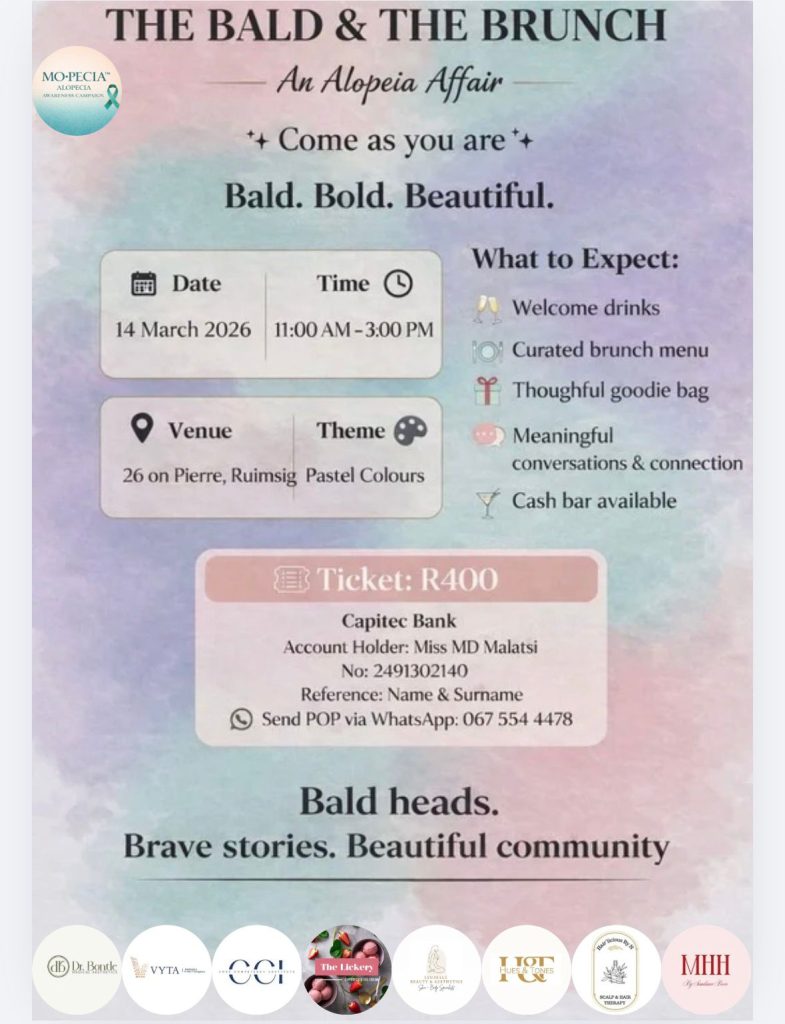
“Many people with alopecia isolate themselves because of shame or fear of being judged,” Motshabi explains. “I wanted to create a safe space where they could see they are not alone.”
The event will also include medical professionals who can guide attendees toward proper diagnosis and treatment. But more importantly, Motshabi hopes the event will help people reclaim their confidence. “I want them to look in the mirror and see how unique and beautiful they are, with or without hair.”
A Message to Anyone Living With Alopecia
Motshabi’s message to others experiencing hair loss is deeply compassionate. “It’s okay to grieve hair loss, but don’t let it consume you.”
She encourages people to seek medical help, lean on the community, and remember that alopecia does not define who they are.
“You are not alopecia,” she says.
Looking Ahead
Motshabi hopes to grow the MO•PECIA initiative into a recognised global movement that supports people living with alopecia through education, community programs, and partnerships.
Her goal is simple but powerful: to ensure that no one navigating alopecia feels alone.
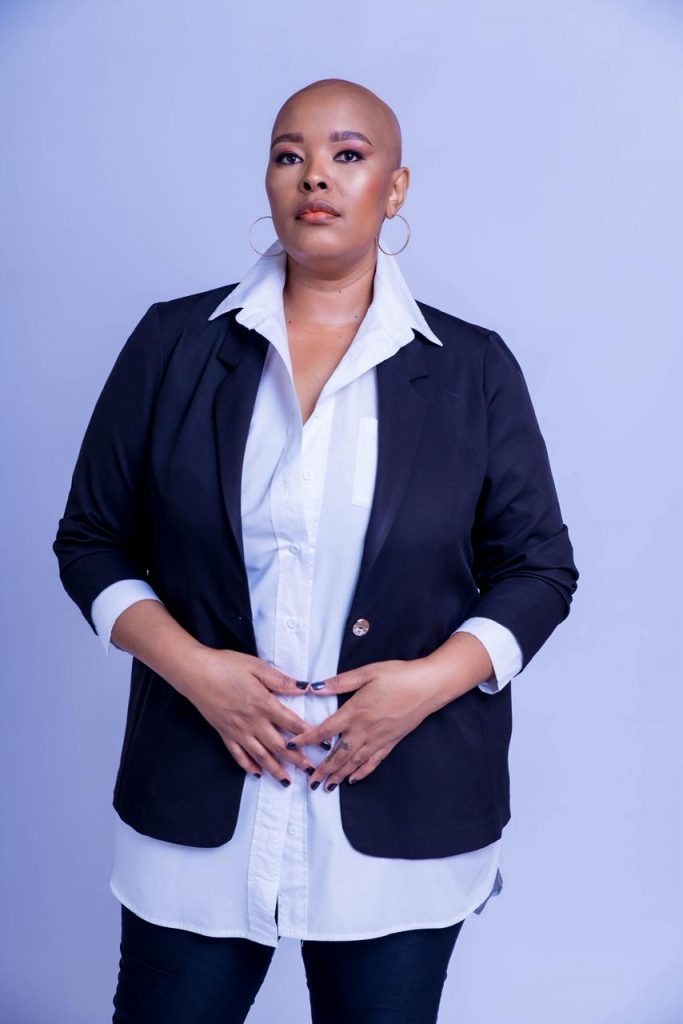
Motshabi Malatsi’s journey is a reminder that hair does not define beauty, and a condition does not define a person. Through MO•PECIA, she is transforming what was once a deeply personal struggle into a movement rooted in healing, education, and community.
For many people living with alopecia, silence and shame have often been part of the journey. But voices like Malatsi’s are changing that narrative, creating spaces where people feel seen, supported, and empowered to embrace themselves fully.
Because sometimes the most powerful crowns are not the ones we wear on our heads, but the confidence and courage we carry within.
Connect with Motshabi Malatsi:
Instagram: mo_tshaby
TikTok: @mo_tshabi
Facebook: Motshabi Malatsi
_In The Room
Published by Neontle Mogomotsi